
Training and Education
An Agape’s camp is recognisable for it its specific educative style, characterised by interchange and confrontation about ideas and opinions. A camp is a journey of research and both individual and collective growth that does not offer prepacked answers, but it rather suggests reflection paths and offers tools to face diverse subjects in a critical way.
Since the 1990s, Agape has become aware that it deals with an “enormous education potential […] and, therefore, with the need to systematise it into a general framework of which all those who take part in Agape’s work can be aware.” That same decade also saw the birth of the first Education Camps, in which time and effort have been invested on the reflection about the modalities of education relationship and the pedagogical guidelines followed in the centre.
We have worked on educational workshops, on games, on teaching peace and cooperation, on conflicts management, on gender differences, on the centrality of the relationship with the other, on the importance of listening, and on group dynamics. Over the years, Agape has developed several educational instruments which have characterised its educative style. All those who want to be part of a Staff Group in Agape are asked to participate to a training path proposed by the centre. This path has evolved in time, being modified and adapted according to the needs expressed time after time by those who have worked on Staff Group activities.
In 2011, a workgroup on education carried out an analysis of the educative model adopted in Agape, which has resulted in the last revision of the education mechanisms in the Centre.
Educative model
Organisation of the training for Agape’s Staff Groups
“Dealing with education means being willing to change, being a work in progress”.
The main goal of Agape’s educative model is to guarantee a lifelong, peer education, i.e. the acquisition and sharing of competences favoured by the asset of both practical and theoretical knowledge within the resources made available by our Centre. Saying that it is a lifelong education also implies the possibility to acquire the skills and sensitivity to plan and look ahead into the future, yet being able to retrieve knowledge and experiences from the past of the individuals and of Agape’s community.
First of all, it is important to know the nature of an Agape’s camp , which represents an experience of strongly communitarian life and deep interaction. Every camp as a subject, a style, some content, whilst the balance among the activities offered in it (social activities, interrelationships, games, plenary meetings, workgroups, workshops…) depends on the age of the participants.
Every year, Agape organises an EDUCATION CAMP opened to everybody. Particularly, all those who want to become part of a Staff Group for organising and managing a camp are strongly invited to participate. The education camp proposes a new subject every year, trying as hard as possible to answer the needs that arise also from the Staff Groups along the year and from the Staffissima event. The camp normally lasts 3 to 4 days and tries to involve other local actors that deal with education. The Staff Group that manages this camp is composed by members of Staff Groups and participants from other camps both for children and adults, and it includes the presence of the Campolavoro Group and the Resident Group. This Staff Group changes every year and it is responsible for the organisation of the formative moment (horizontality of competences, verticality of responsibilities). The idea is for each and every one to participate as an individual with their own competences – also the technical ones – in an organisational group whose participants come from all the other Staff Groups, so to guarantee the mechanism of peer-to-peer learning. It is not unusual for the Staff Group to avail itself of external speakers, who are called to intervene and share specific competences and experience.
Staff Groups attend to 3 organisational meetings along which they build the workgroup, discuss the subject, define the activities, debate on the rules to be adopted during the camp and work out the logistic details.
Beyond the organisational meetings autonomously organised and managed by each Staff Group, Agape requests every Staff Group to participate to the STAFFISSIMA event, an annual meeting held in Agape in which all the Staff Groups get together for an “ordinary” Staff meeting, which constitutes a precious occasion to share contents and instruments. Within the event, all the Groups gather for a plenary moment, managed by the Staff Council, meant for the interchange and sharing on the subjects that transversally interest all the groups.
The Staffissima is also the time in which the decisions about the Education Camp should normally be taken (choice of the subject, formation of the Staff Group, promotion and valorisation of the camp).
The STAFF COUNCIL is a group of people which offers supervision to all the Staff Groups in their critical moments, accompanying them along their way. Composed by people who are external to the dynamics of the Staff Groups, the Council offers – in a peer-to-peer mode – a point of view, ideas and exercises that can be useful to face possible difficulties.
The Staff Council is responsible for organising the plenary moment during the Staffissima and for proposing a list of names for the Staff Group of the Education camp, whilst the choice of the members for it is on all the Staff Groups. Yet not being part of it, the Council coordinates the beginning of the work of the Education Camp Staff Group, so offering an element of continuity when it is completely renewed. The Council is appointed by the General Committee and has to be constituted by people with acknowledged competence and experience, and who have taken part in one or more Staff Groups in the past, whether for children or adults camps.
The current educative model is the result of the work of a Workgroup on Education named by the General Committee in 2011. Composed by 6 members from various Agape’s Staff Groups, the Workgroup has revised the former educative model, proposed the current one and developed the Education and Training Map.
Training process
First of all, it is important to keep in mind that all Agape’s Staff Groups are composed of volunteers who want to contribute with their own competences to the organisation and management of a camp.
The choice of the different Staff Groups’ members is on the Centre, that takes its decisions with the support of the Staff Council. Nonetheless, all the Staff Groups must be aware that they are appointed by the General Committee, or by the Executive Committee in its behalf, also through direct actions like the approval of the General Planning.
Staff Groups are normally composed by 5 to 10 people, including a member of the Resident Group to guarantee a direct connection with the life of the Centre.
To become a member of a Staff Group of an adult camp, relative abilities or know-how are normally a requirement; this is why the candidate new members are normally found among the participants to the camps or in groups and environments somehow related with them.
For the Staff Groups of children camps, new members can be chosen among people from other groups in Agape (members of the Work-camp Group, participants to adult camps), but it is not unusual to appoint people from related environments or friends of other members of the Staff Group.
Sometimes, those who are interested can express their intention to Agape’s steering committee and with them evaluate the possibilities of employability, according to the interest of the candidate and to the needs of the Centre.
So, there is no possibility of auto-appointment for any Staff Group, but each of them can put forward names of people who are interested in it. To be part of a Staff Group, particularly for a camp that contemplates the participation of children, it is of prime importance for every candidate to have participated to Agape’s Education Camp for one time at least.
In order to express your interest to be part of a Staff Group, you can write to one of the following email addresses:
Pedagogical Guidelines
Common bases for all Agape’s camps
Since the 1990s, Agape has become aware of its educative role in the many camps for adults and children along the year, and it has started revising the pillars of its own pedagogical model.
This is how, under the supervision of Franca Bezzi, the 5 guidelines were revised:
- Motivating people for the work in Agape. The trick is doing it while making it clear how concrete the dimension of the agape is, and offering to every one the possibility to act in single camps and yet keeping a global view of the various projects that really make Agape.
- Educating to adultity. A big task for future Staff Groups members is to make them aware of the distance in age and maturity which separates them from the children and adolescents who participate to the camps, and of the educative responsibilities they have towards them. The trick is working on the self to be as much “similar to our own” as possible, in order to get closer to our truest authenticity and not to confuse it with spontaneity or pure instinctivity. Using an apparent paradox, we can say that only those who have long worked on the self can legitimately act spontaneously.
- Educating to the relationship with the other. We all agree in theory, but practice is much more difficult. Within the education on this relationship, the education on differences – among the sexes, among classes, among races and cultures – is worth special attention.
- Educating to freedom in terms of responsibility. Since the educative point of view, this is quite an important issue in a place where coherence and authenticity are common goals. Very often, the concept of “being free, being responsible” leads to confusion, because freedom is commonly perceived as rebellion, while responsibility is frequently lived as an excessive weight.
- Meeting the gospel. This is another difficult and yet thrilling challenge: talking about God in a secular way, giving witness of our faith to those who do not go to church accepting the risk of superimpose our projections on the word of God. How can we get ready to face this challenge all together, believers and non-believers?
These guidelines still represent a valid model on which the Centre bases its own work with all those who have some kind of role in it. In 2011, as a result of the educative model revision, these guidelines have been compensated by the elaboration of an Education and Training Map.
Education and training map
Key elements of a camp in relationship with the structure of our Centre
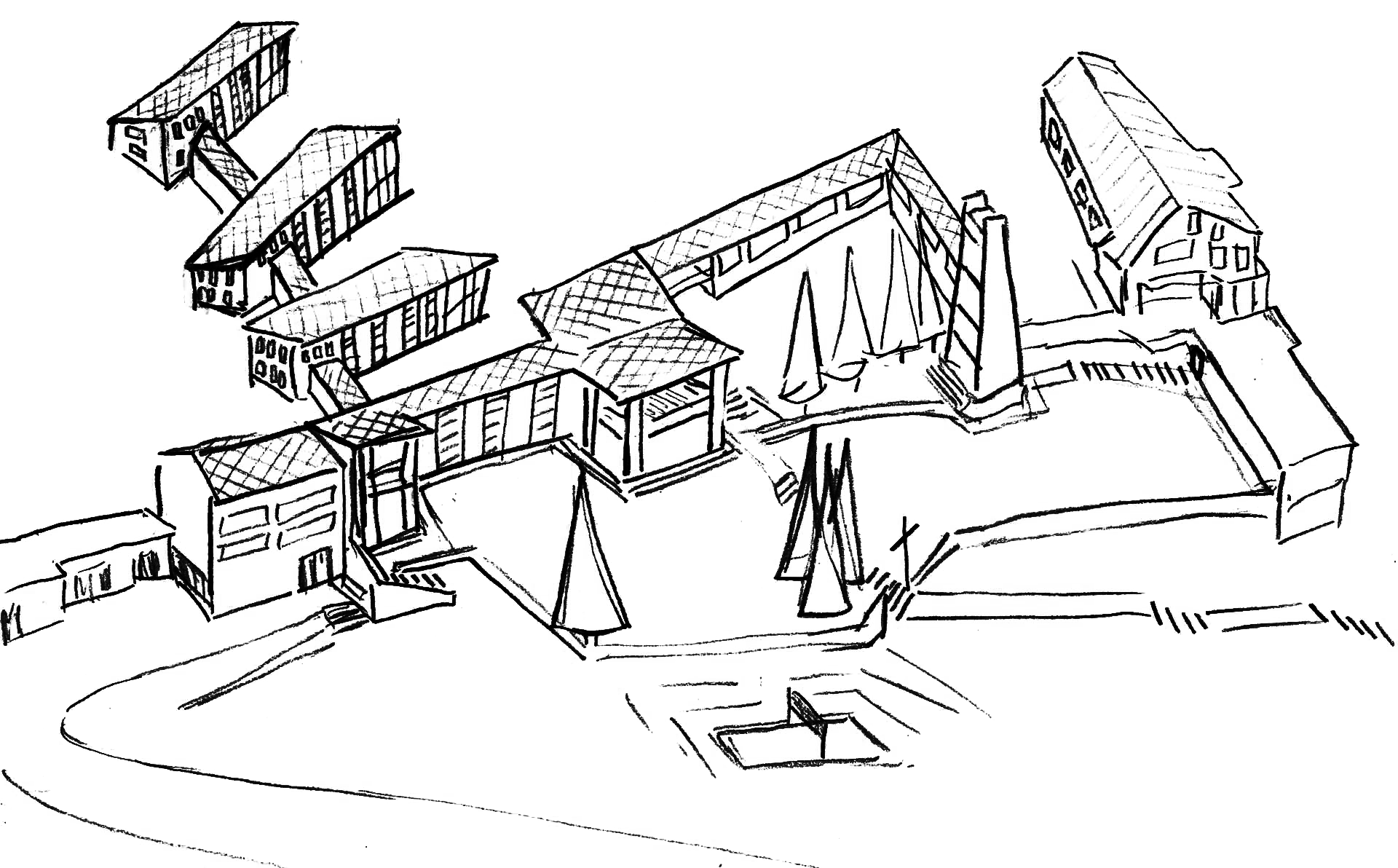
The Education and Training Map is a symbolic map drawn on Agape’s architecture, because this encloses the values of its plan.
The training and educative interventions within the camps are not (indistinctively among adult and children camps) different from the educative and training paths that each and every one of us follow when we go to Agape as participants, Staff Group members or Resident Group members. This map describes an educative and training process that is valid for everyone, independently of their role in the Centre.
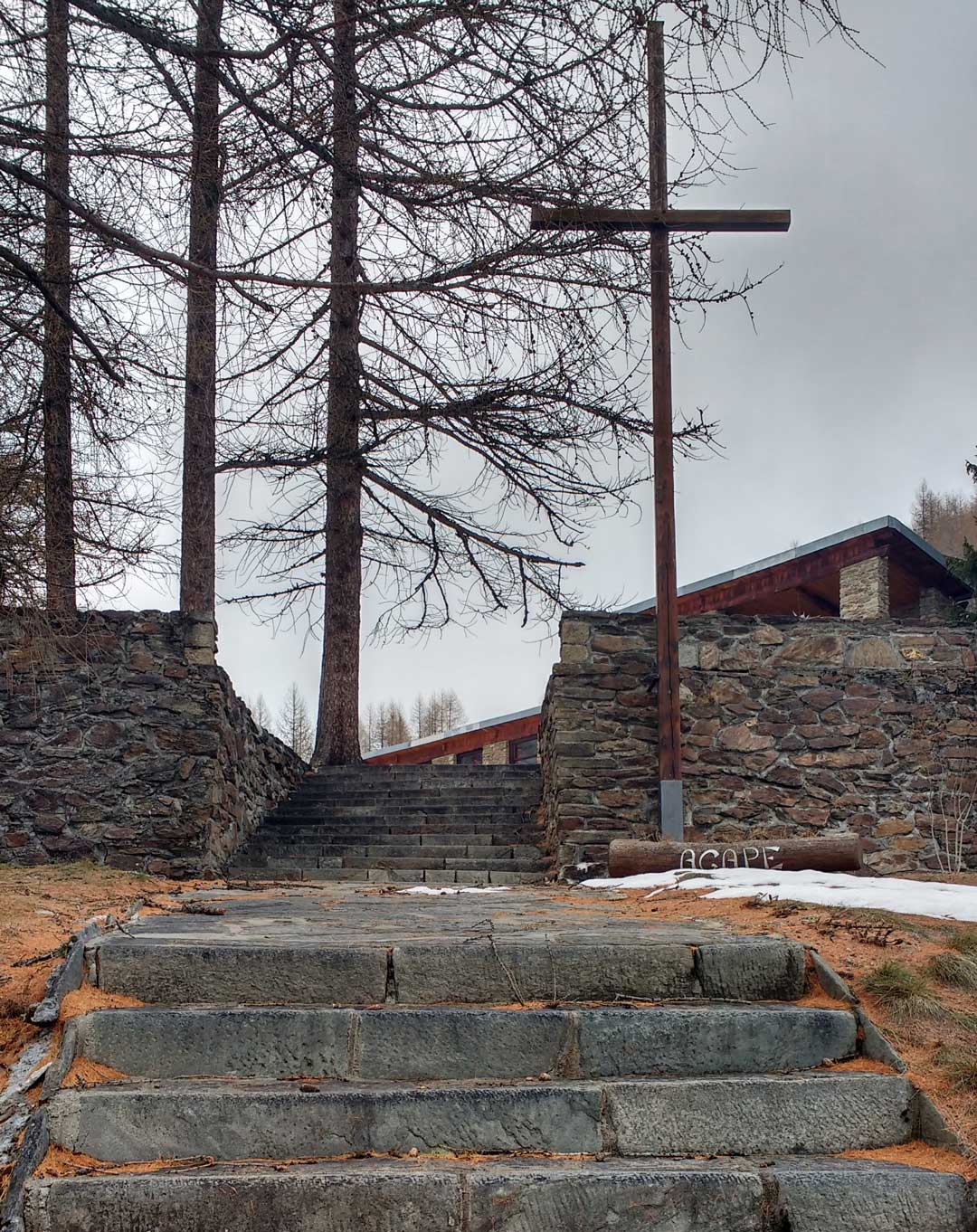
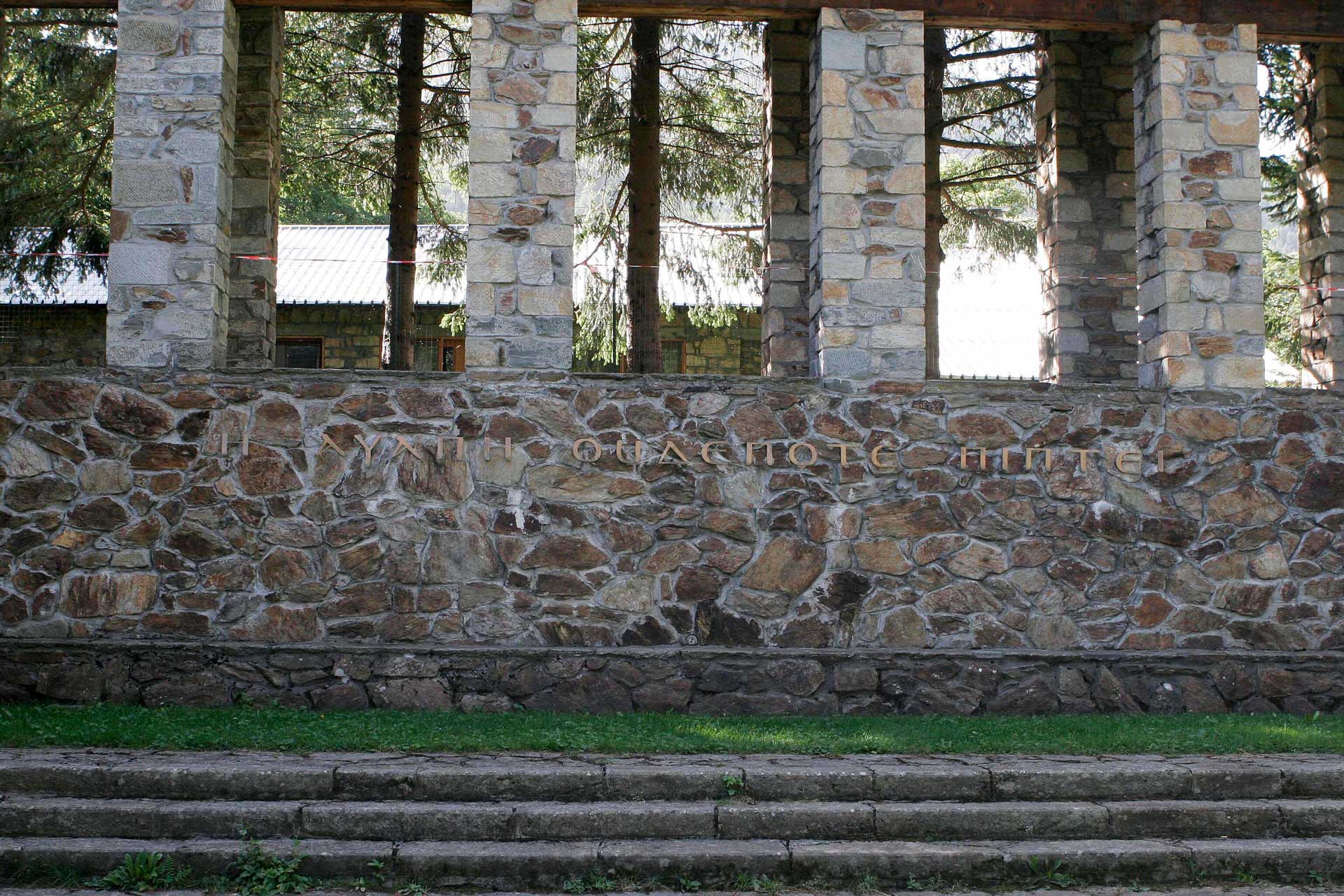
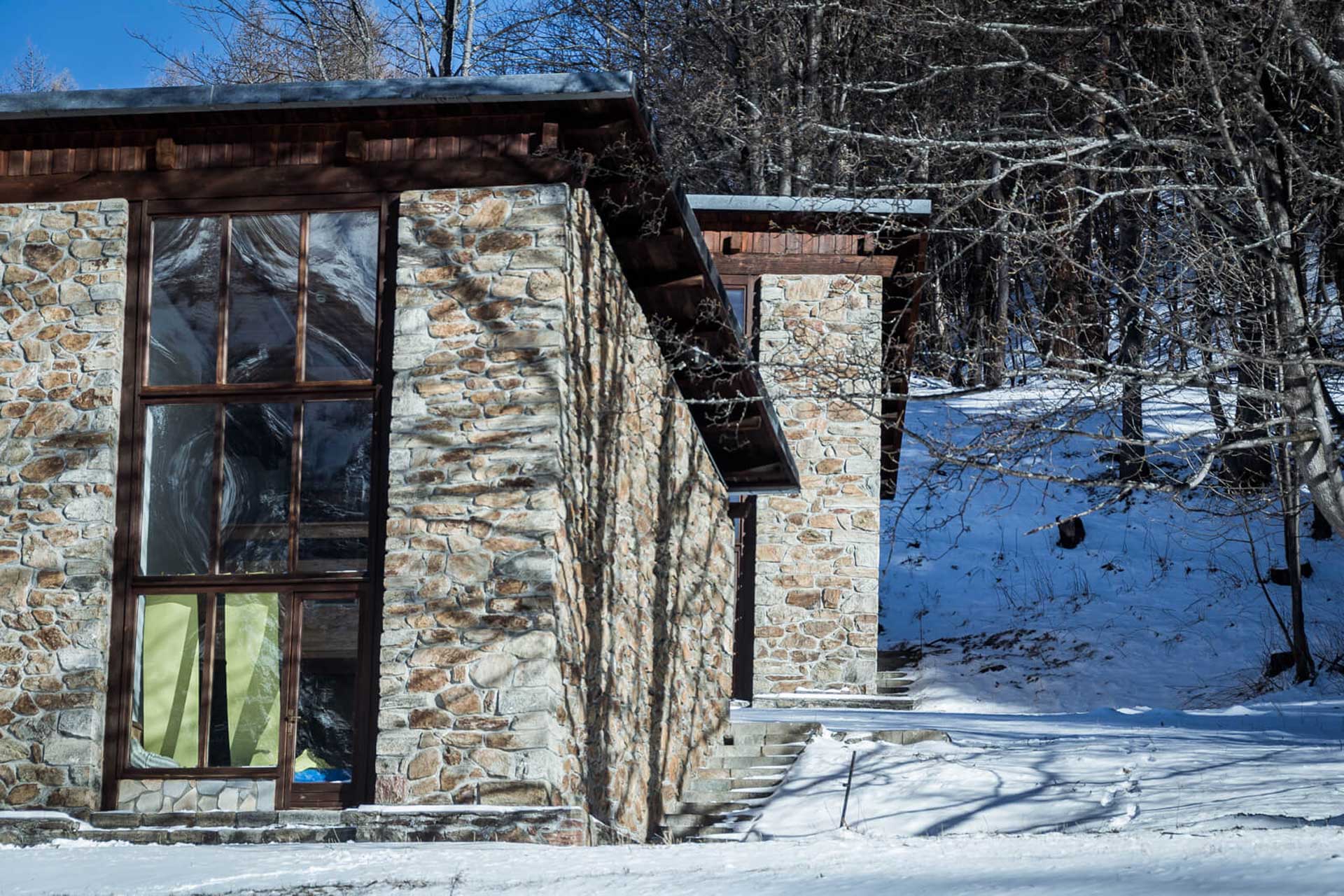
The significant and representative places in this path are five: the stairways, the open-air church, the hall (salone), the cottages, the bell tower. In each one of these places we find some keywords and some questions.
The stairways
The stairways represent the arrival to the Centre and the intentionality in the path that each and every one has decided to take. Each individual is pushed by a personal motivation and in Agape they meet many others to which it is not always easy to relate.
The open-air church
The open-air church is like a square in which to experience the freedom of the encounter with diversity, both with other people and within the self. In this place one can feel lost, can experience doubts and curiosity, and can even meet God.
The cottages
The cottages represent the place where to go to seek refuge in difficult moments along the educative path. As a matter of fact, along a path of growth and change every one of us needs support, an outlet and a guide.
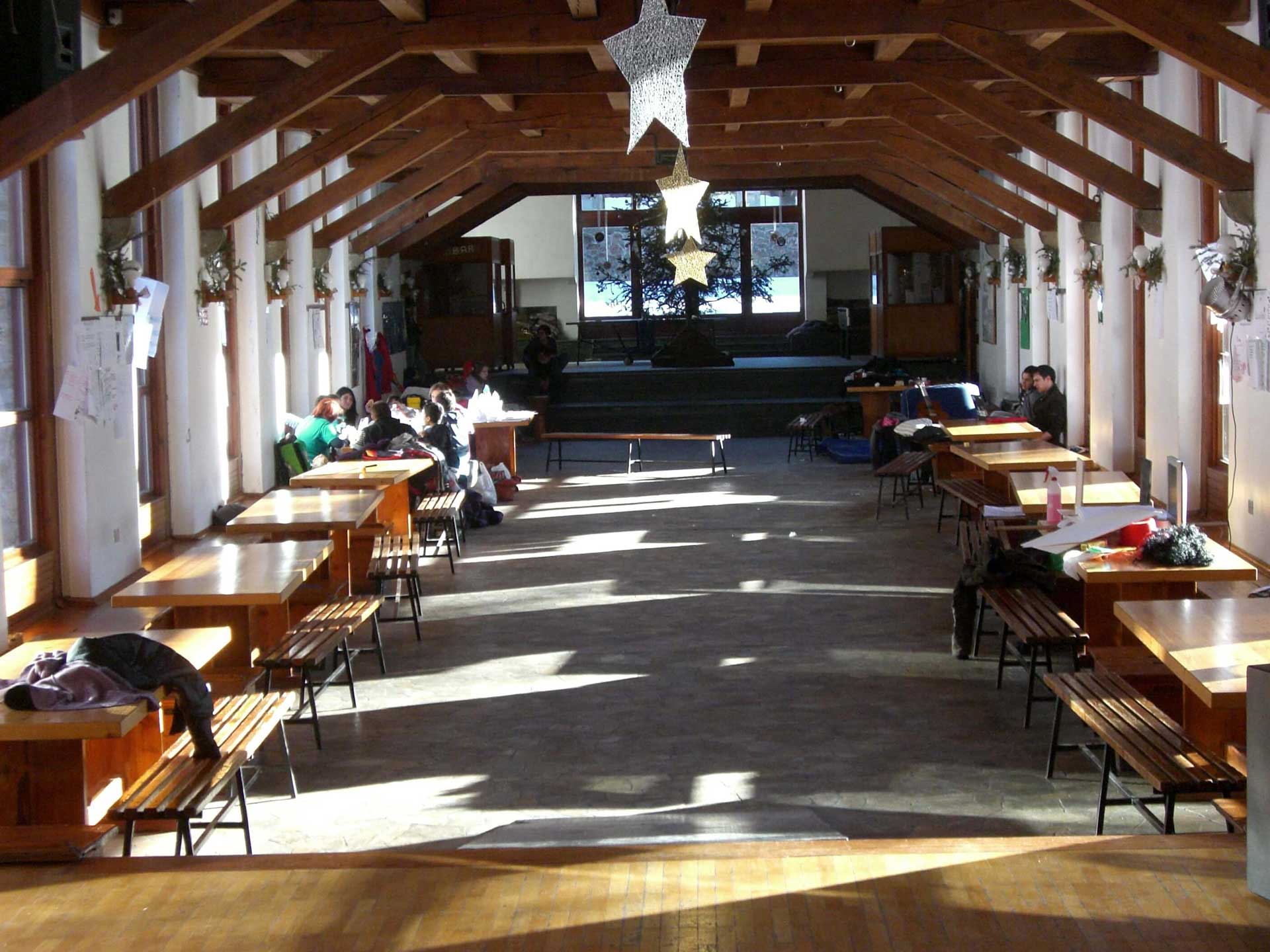
The salone
The salone is the place where community is built, where diversities meet and contradictions are experienced; it is the place where people learn to participate with their head, body and emotions. In this place, not only people in their diversity are told about, but also God and his Word that comes from faraway.
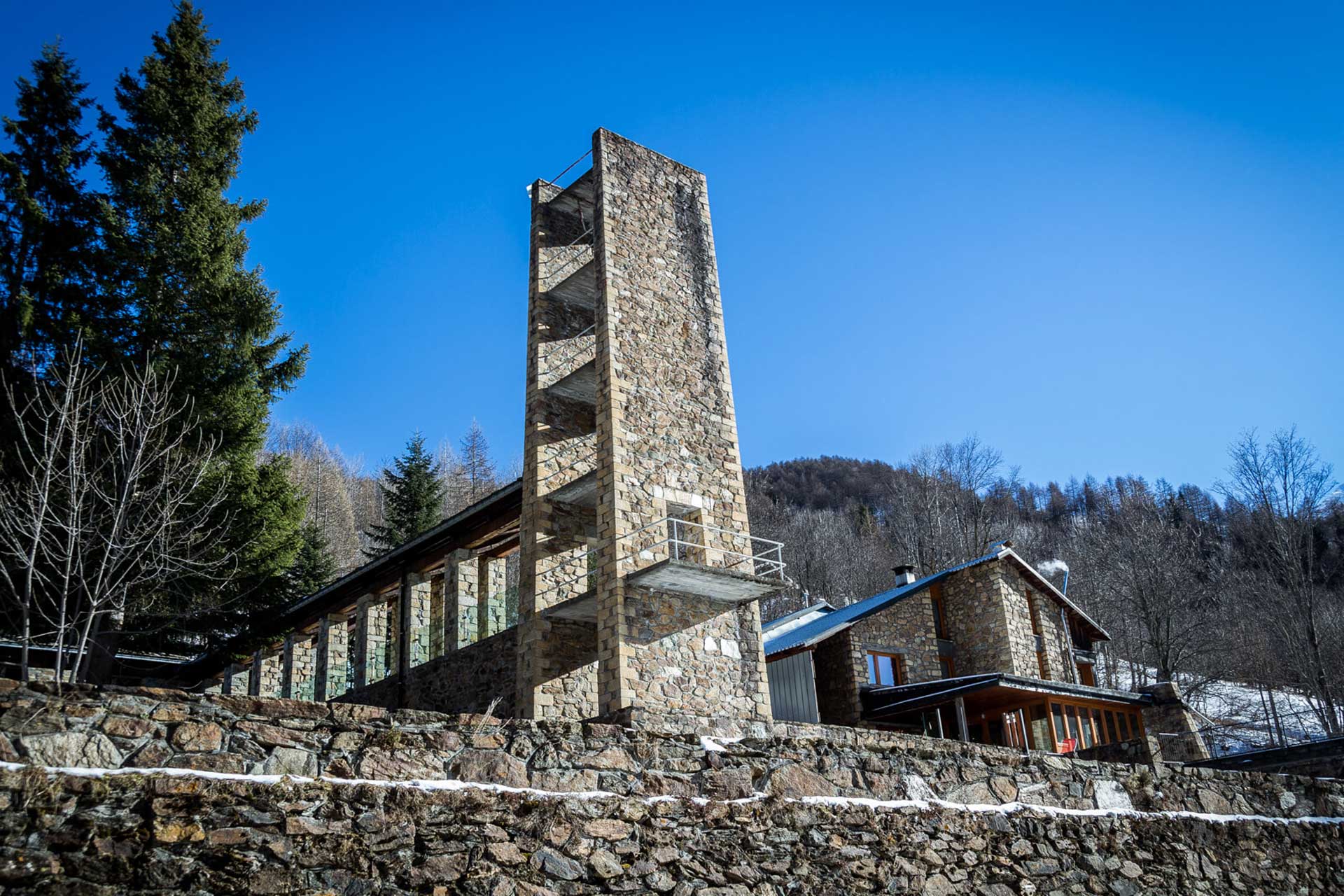
The bell tower
At the end of the experience, the bell tower represents the watch towards the real world to which people come back, hopefully after having gone through a change, having developed new awareness and acquired new instruments to face reality.
In the section “Documents on education” you have access to the whole document by the Workgroup on Education and Training, which also includes the complete version of the map.
Every stop in the map contains questions useful for those who take part in Agape’s life, and some indications on how to face the different aspects of a camp management.
How to donate to Agape
Agape lives thanks to the support of all of us. If you wish to support us make a donation!
via bank transfer: Our bank account at Banca Popolare Etica
Account holder’s name: Agape Centro Ecumenico
IBAN IT72A0501801000000000110460
BIC CCRTIT2T84A
ATTENTION: the following bank details are NOT to be used for the payment of registration fees or camp fees!


